Why this page is mostly photographs
Everybody in this trade uses the word rebuilt and almost nobody defines it. The only honest way to settle it is to show the machine at each stage, because a photograph of a stripped frame cannot be faked with a paint gun. These pictures are of our own machines in our own shop.
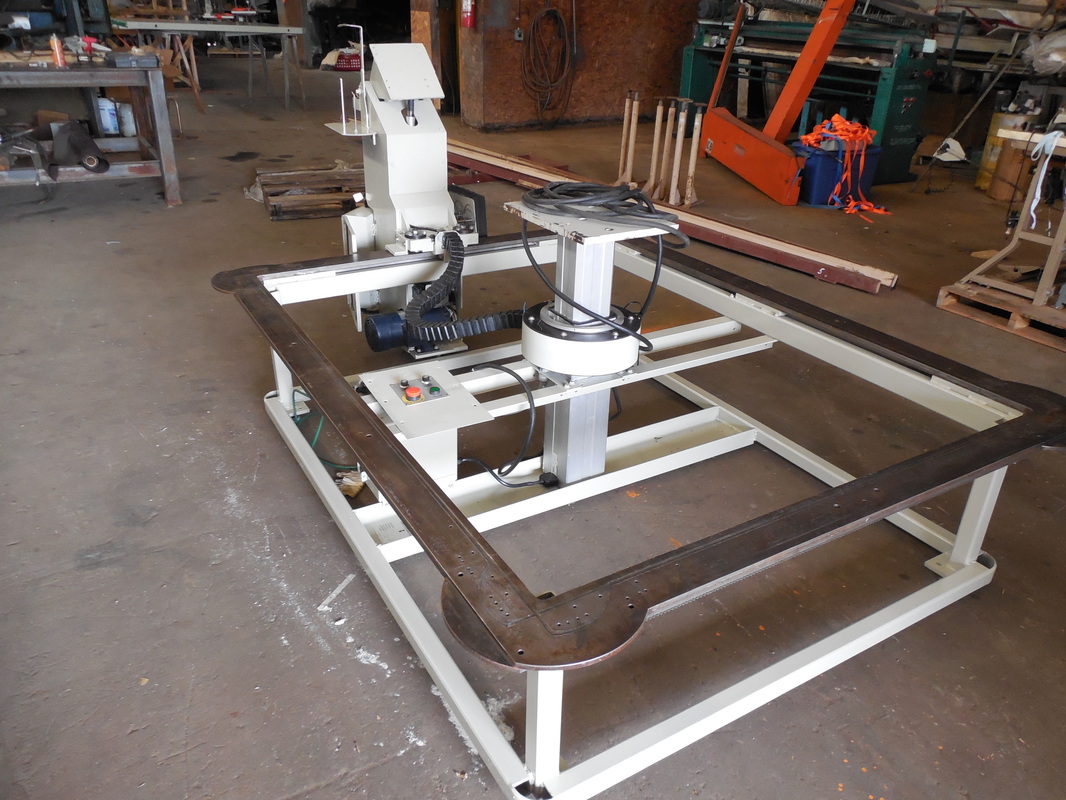
The stages below are the order we work in, and they are the same order on every machine, whether it is a James Cash, a United, a Spuhl Anderson, a Porter or an Atlanta Attachment.
Stripped to the frame, rewired, painted, run under power, crated. If a seller cannot show you the middle of that sentence, they did not do it.
1. Stripped to the frame
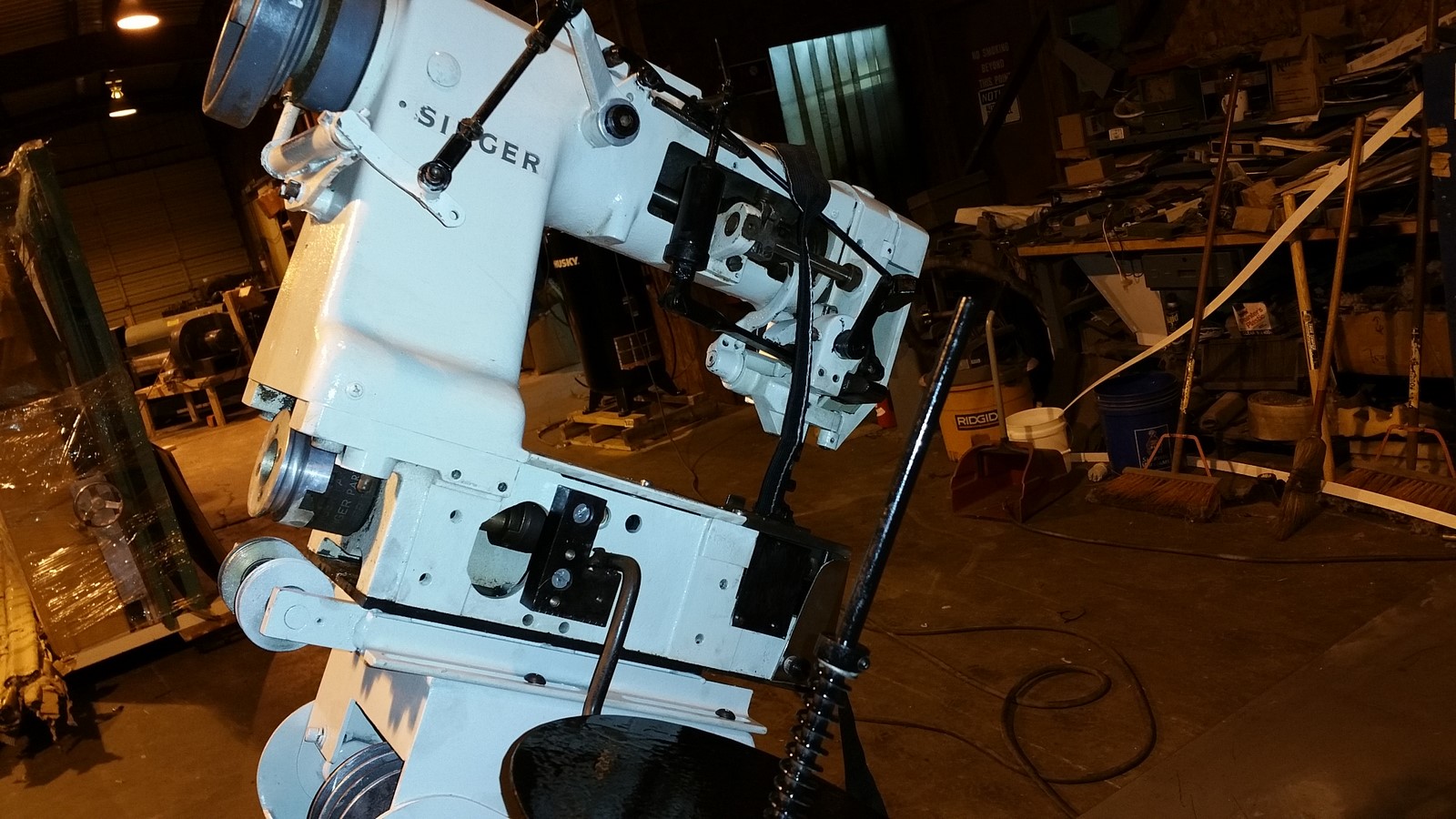
The machine comes apart. Head off, carriage off, top off, drive out, wiring out. What is left is the frame, and this is the point at which we find out whether the machine is worth the work. A straight frame is rebuildable. A frame that has been hit hard enough to move is not, and we say so rather than paint over it.
Everything that comes off is tagged and kept together, because a tape edge machine is full of parts that look interchangeable and are not.
2. Wear parts machined and replaced
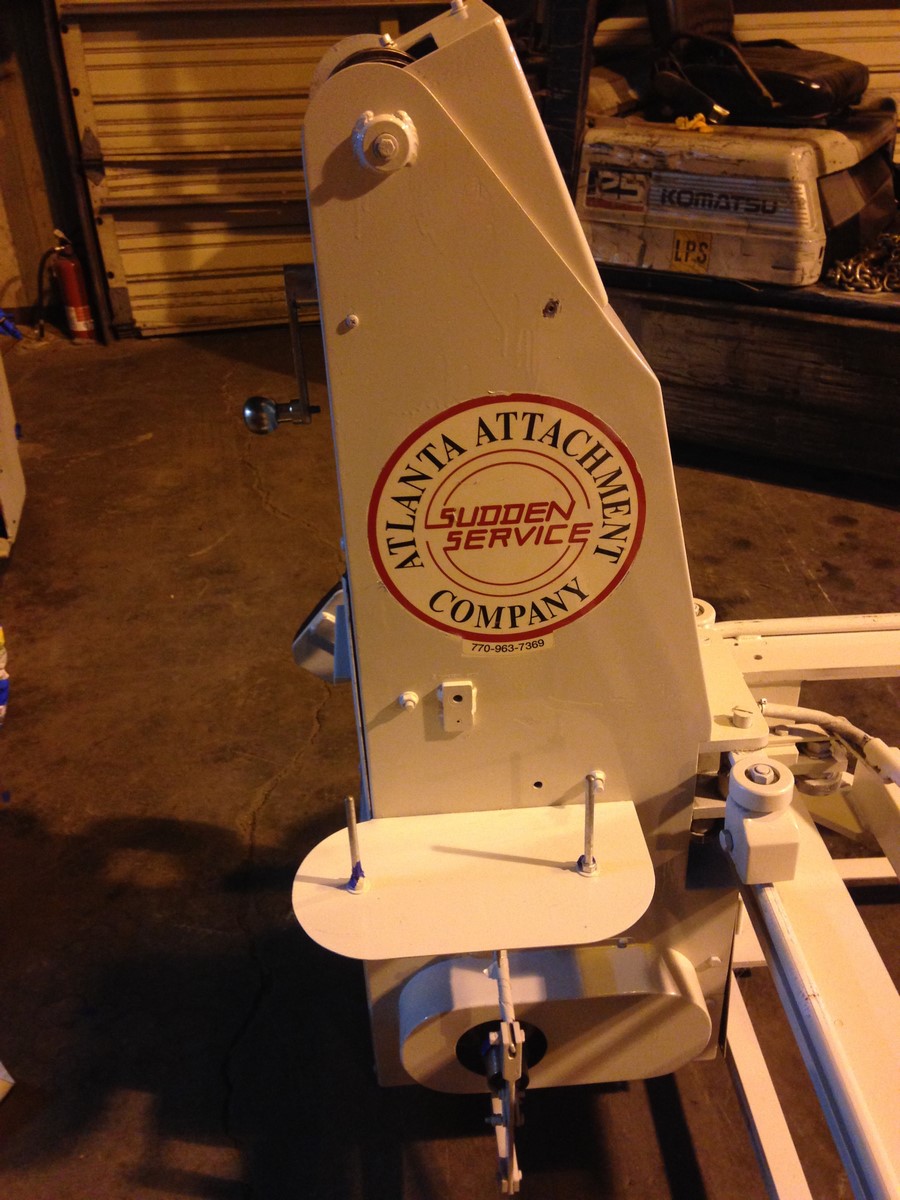
The track the carriage runs on, the bearings, the clutch, the lift screws and the pivots all get measured. Anything outside tolerance is replaced or machined back. This is the stage that decides whether the seam will be straight in two years, and it is also the stage that is invisible in the finished photograph, which is exactly why sellers skip it.
3. The sew head on the bench
The head comes off the machine and is rebuilt on its own. Stripped, wear parts replaced, hook and feed reset, timed, and run on the bench before it goes anywhere near the table. A head that has been timed on a bench under a light is a different machine from one that has been adjusted in place with the cover half off.
If a head is beyond rebuilding we fit another, and the listing says so plainly rather than calling the whole machine rebuilt and leaving you to find out.
4. Electrics and controls
On most machines the wiring is replaced rather than repaired. New electrical components, a new panel where one is needed, and on machines that take one, a new PLC with the drive set up for a separate straight speed and corner speed. Under electric machines get their feed rerun beneath the table so nothing hangs where the operator works.
The supply is set to what the buyer actually has. Tell us the voltage, phase and frequency at your plant and the machine leaves wired for it.
5. Automotive paint
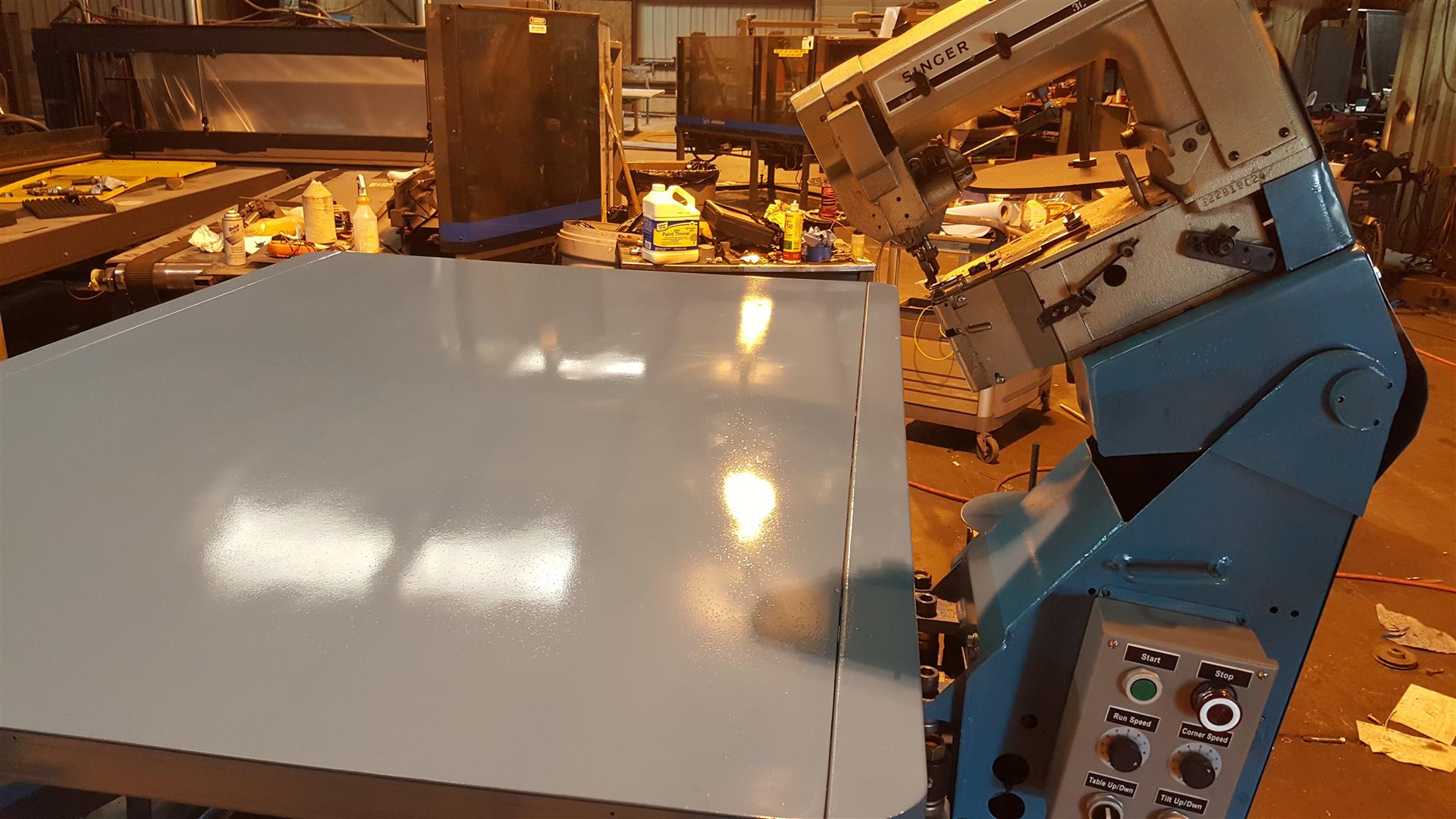
The frame, the table and the carriage are painted with an automotive finish and a hardened anti rub surface, which is what stops a table looking tired after a year of mattresses being dragged across it. This is the stage that makes the photographs look good, and it is deliberately the fifth of six rather than the first of one.
6. Run and tested under power, then crated
The machine is assembled, powered up and run. The carriage is walked round, the corner control is set, the lift is cycled through its range and the head sews. Nothing leaves this shop that has not been run under power, and we will send you the video of your machine running before it is crated.
Then it is crated properly. The head and the carriage are packed separately and the machine is boxed for the truck or the container it is going on.