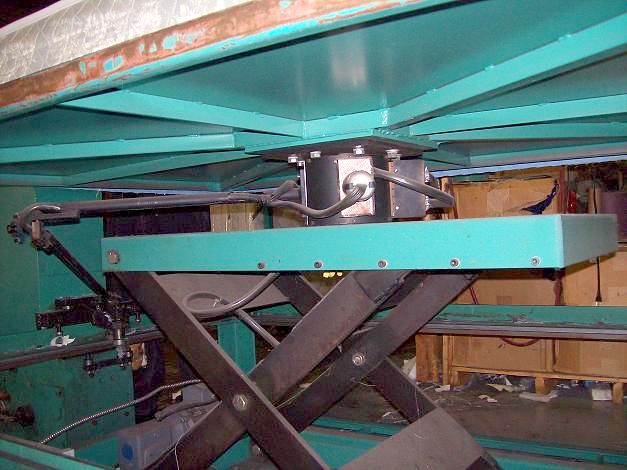
What a scissor arrangement is
A scissor arrangement is two tape edge tables set at an angle to each other so that one operator path serves both. The name comes from the shape the two tables make on the floor. It is a layout, not a model: the machines in it are ordinary tape edge tables, and any pair of tables that suit each other can be worked this way.
The point of it is the dead time. On a single table the machine waits while a finished mattress comes off and the next set of panels goes on. With two tables the operator turns to the second table and keeps sewing while the first is being loaded and unloaded, so the head spends more of the shift actually sewing.
Nothing about the machines themselves changes. Each table still has its own carriage, its own sew head and its own controls, and each one is closed exactly as it would be on its own. What changes is the shape of the shift: instead of sewing, waiting, sewing, waiting, they sew, turn, sew, turn.
A scissor arrangement is a floor plan, not a machine. What you buy is two tables and the discipline to run them as one.
What the arrangement needs to work
Two things decide whether it works: the floor and the handling. The tables have to sit so that the operator moves between them in a few steps without walking around anything, and there has to be somebody or something loading and unloading the table that is not being sewn. Without the second half you have simply bought a table that is idle.
- Two tables of the size you actually close, most often queen with extensions to king.
- Enough clear floor for an operator to move between them without crossing a gangway.
- A loading and unloading arrangement on both tables.
- A matched supply, so both machines run on the same voltage and phase.
Buying machines for a scissor station
If you are putting a scissor station together, buy the two tables together rather than one now and one later. Matched machines share spare parts, share needles, and let one operator move between them without thinking. Two different classes with two different handlebars and two different corner controls will slow the operator down exactly where the arrangement was supposed to speed them up.
We can quote a pair from the catalogue and rebuild both to the same specification, including the same head class, the same table size, the same lift range and the same electrics. Tell us what you close and how many, and we will tell you what the pair should be.
One practical note on spares. A pair of matched tables needs one set of spares, not two, and the parts that actually stop a machine are small: needles, a belt, a switch, a bearing. Buying the pair together is what makes a single small parts shelf enough to keep both of them running.
When a conveyorized machine is the better answer
A scissor arrangement buys you operator time. A conveyorized machine with a flip over unit buys you handling. If what limits your line is the operator walking, two tables help. If what limits it is lifting and turning a heavy mattress, a conveyorized machine with a flip over unit is the honest answer, and it is a different budget and a different floor plan.
We sell both and we have no reason to push you at one. Tell us the mattress sizes, the heights and the daily count, and we will tell you which one the numbers point at.